Why SMEs Are Moving to Cloud-Based Payroll Services
Payroll often feels like a weekly stress point—slow tools, manual checks, and constant worry; cloud payroll removes friction and gives business owners space to breathe.
Small business owners carry enough pressure. Clients to serve. Bills to manage. Staff to support. Somewhere in that mix sits payroll—an essential task that rarely gets the time or attention it deserves.
Payroll Compliance & Mistakes
- Top 5 Payroll Mistakes Small Businesses Make and How Xero Solves Them
- Common Payroll Mistakes SMEs Make and How to Avoid Them
- Employee Payment Errors: Why They Happen and How Xero Fixes Them
For many SMEs, the problem isn’t that payroll is complicated. It’s that it’s fragile. One missed update, one wrong rate, or one outdated spreadsheet can create mistakes that ripple through tax filings, staff payments, and trust.
A bookkeeping consultant once shared a moment from a trade business she supported. The owner ran payroll in a dated desktop tool. Every payday became a scramble: export timesheets, chase approvals, update tax tables, then hope nothing broke. After a missed tax change caused a penalty, he moved to cloud payroll. What once took hours became a 10-minute review. The relief on his face, she said, was real.
High-authority bodies echo this shift. The ATO and IRS both emphasize the importance of accurate, up-to-date payroll data for small employers, especially as tax rules change through the year. More SMEs are discovering that cloud payroll makes this easier—automating updates, reducing errors, and offering the clarity leaders need to make decisions.
Cloud payroll is not just a new tool. It’s a calmer way to run the business.
The Push Away From Manual, Error-Prone Payroll
Many SMEs move to cloud payroll because their current system feels brittle. Manual entry, spreadsheets, and outdated software increase the chance of errors.
Read more: Payroll Management & Optimization
- Cash Flow Risks from Poor Payroll Management and How to Fix Them
- Why SMEs Choose Xero Payroll Over Manual Accounting
- Xero Payroll vs Other Payroll Software: Which is Best for SMEs?
Cloud tools simplify this by keeping everything updated automatically and centralizing pay rates, tax rules, hours, leave, and reporting.
Benefits
- Fewer mistakes
- Faster payroll cycles
- Automatic tax table updates
- Reduced admin burden
You risk payroll delays, incorrect payments, avoidable penalties, and rising staff frustration.
A local café switched to cloud payroll after a pay-rate update was missed during a busy season. Mistakes vanished once changes synced automatically.
Better Compliance Through Automatic Updates
Employment laws change often. So do superannuation, pension, and tax rules. Cloud payroll updates in real time, reducing the risk of running outdated rates.
Read more: Payroll Tax Filing Guides (Region-Specific)
- Filing Payroll Taxes in Xero: A Simple Guide for Australian Small Businesses
- How to File Payroll Taxes in Xero: A Clear Guide for U.S. Small Business Owners
- What Every United Kingdom Small Business Should Know About Filing Payroll Taxes in Xero
Benefits
- Automatic compliance alignment
- Up-to-date employment rules
- Clear audit trails
- Instant access to correct pay categories
A report cited by the ICAEW noted that small businesses are more likely to face payroll compliance issues when using manual systems. Cloud platforms reduce that risk significantly.
Even minor errors can trigger reviews, penalties, or employee disputes.
A real estate agency avoided a penalty after cloud payroll flagged a classification mismatch the owner didn’t know existed.
Remote Work Made Cloud Payroll Inevitable
Teams today work across cities, homes, and job sites. Desktop payroll wasn’t built for this reality.
Read more: Xero Payroll Setup & Guides
- How to Set Up Xero Payroll for Your Small Business
- Automating Payroll Calculations in Xero: Step-by-Step
Cloud systems allow owners, managers, and bookkeepers to access payroll anywhere, review approvals, and handle changes without physical files or office access.
Benefits
- Anytime access
- Easier collaboration
- Faster decision-making
- Secure data storage
You remain tied to one computer, one location, and one outdated workflow—slowing down operations and approvals.
A contractor with teams across three sites shifted to cloud payroll when travel kept delaying payroll days. The next month, every pay run was completed remotely and on time.
Real-Time Data That Actually Helps Business Decisions
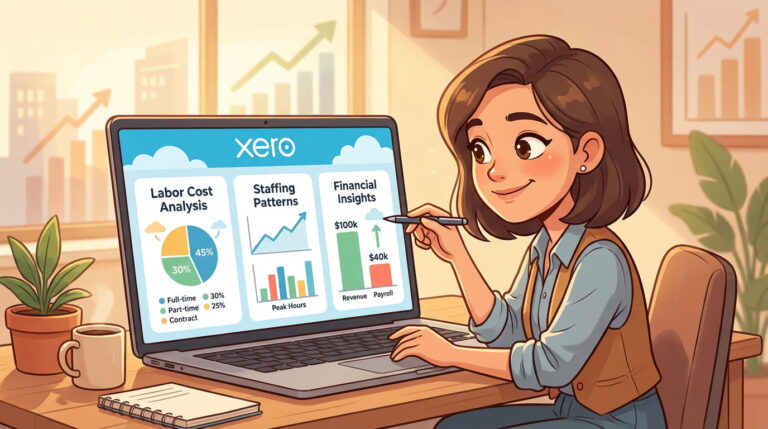
One reason SMEs adopt cloud payroll is the clarity it brings. Real-time dashboards show labor costs, overtime, leave balances, and trends that impact cash flow.
Benefits
- Better forecasting
- Clear labor-to-revenue ratios
- Early visibility of overtime creep
- Insight into resource planning
A study referenced by the OECD found that SMEs with real-time financial data experience fewer cash-flow shocks.
You may continue guessing in areas where the numbers could give you answers.
A digital agency realized from its cloud payroll dashboard that overtime surged at quarter end. Simple planning changes reduced burnout and lowered costs.
Integrations That Reduce Double Work
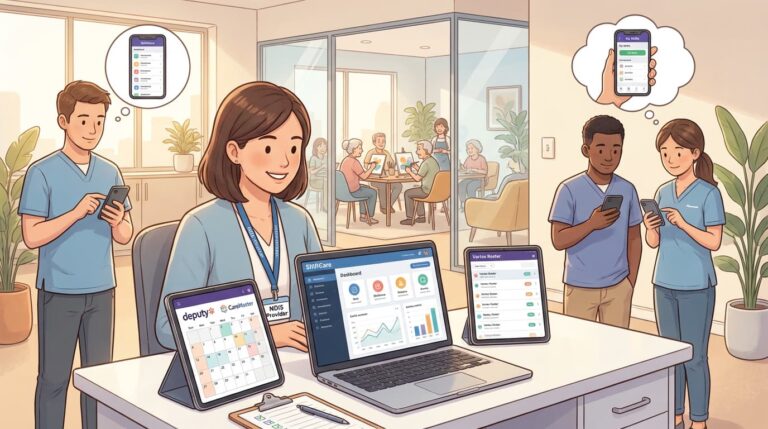
Cloud payroll connects with accounting platforms, time-tracking apps, HR systems, and rostering tools. This means fewer file exports, fewer mistakes, and less admin.
Read more: Payroll Management & Optimization
- In-House Payroll vs Outsourced Payroll: Pros, Cons, and Xero Benefits
- 7 Payroll Reports Every SME Should Track in Xero
Benefits
- Single source of truth
- No duplicate data entry
- Better accuracy
- Smooth reporting
You spend time entering data twice, chasing mismatches, and cleaning up preventable errors.
A boutique retailer eliminated weekly reconciliation headaches after linking payroll with their POS and accounting system.
Stronger Security for Sensitive Payroll Data
Payroll contains your most sensitive information: salaries, bank details, tax IDs. Cloud systems offer encryption, role-based access, automatic backups, and secure storage—far safer than spreadsheets or local files.
Benefits
- Controlled access
- Encrypted records
- Automatic backups
- Reduced data-loss risk
A lost laptop, crashed hard drive, or unauthorized access could expose private payroll data.
FAQ
Is cloud payroll more secure than desktop payroll?
Yes. Cloud platforms use encryption, backups, and access controls that most desktop tools cannot match.
Does cloud payroll work for very small teams?
It works well for any team size, even businesses with only one or two employees.
Is cloud payroll expensive?
Most providers charge small, predictable monthly fees that replace the cost of errors, admin time, and outdated software.
Do cloud payroll systems update tax rules automatically?
Yes, this is one of their main advantages for SMEs.
Can multiple people access cloud payroll?
Yes, with permission controls for bookkeepers, accountants, and team leads.
Conclusion
SMEs are shifting to cloud payroll because it simplifies work, reduces errors, strengthens compliance, and brings clarity to everyday decisions. It’s not just a software upgrade—it’s a shift toward calmer, more confident operations. In a world where every hour and every dollar matters, cloud payroll gives small businesses room to grow with less stress.
When payroll becomes clearer and easier, decisions become quicker and calmer. If you’re ready for a smoother way to manage payroll, cloud tools make the shift simple.