Filing Payroll Taxes in Xero: A Clear Guide for Singapore Small Businesses
Handling payroll taxes in Singapore can overwhelm small business owners—complex CPF contributions, IRAS deadlines, and compliance worries—but Xero keeps it manageable.
Running a small business in Singapore is exciting—but payroll taxes often cast a shadow. One local café owner shared how payroll week felt like navigating a maze: CPF deductions, IRAS reporting, and calculating overtime left her team anxious and uncertain. These challenges are widespread.
According to the Inland Revenue Authority of Singapore (IRAS), failure to comply with CPF and tax obligations can trigger fines and audits (IRAS Compliance).
Xero payroll enters this scenario as a stabilising partner. Designed for precision and automation, it helps Singapore small business owners reconcile contributions, file taxes, and maintain compliance—all without the usual sleepless nights.
This guide walks you step-by-step through filing payroll taxes in Xero, so you can regain control and focus on growth.
Read more: Payroll Tax Filing Guides (Region-Specific)
- Filing Payroll Taxes in Xero: A Simple Guide for Australian Small Businesses
- How to File Payroll Taxes in Xero: A Clear Guide for U.S. Small Business Owners
- What Every United Kingdom Small Business Should Know About Filing Payroll Taxes in Xero
- How to File Payroll Taxes in Xero: A Clear Guide for New Zealand Small Business Owners
- Filing Payroll Taxes in Xero: A Clear Guide for Singapore Small Businesses
Understanding Singapore Payroll Tax Requirements
Singapore’s payroll tax landscape involves CPF contributions, IRAS reporting, and employee-related levies. Small mistakes can trigger penalties.
CPF Contributions
- Mandatory employer and employee contributions.
- Automatically calculated within Xero for each pay run.
IRAS Reporting
- Monthly and yearly submissions require accuracy.
- Xero integrates reports that align with IRAS templates.
Key Risks
- Late or miscalculated contributions can incur fines.
- Manual processing increases errors and stress.
With these obligations in mind, let’s see how Xero simplifies the setup.
Setting Up Payroll in Xero for Singapore Compliance
Purpose: Ensure your payroll system is legally compliant from day one.
Configuring Employee Details
- Add CPF numbers, contribution rates, and work schedules.
Automated Deduction Rules
- Set up CPF contributions and tax deductions automatically.
- Reduces human errors and saves time.
Integration with IRAS Reporting
- Xero generates compliant reports ready for submission.
With the system configured, filing taxes becomes routine rather than stressful.
Read more: Xero Payroll Setup & Guides
- The Ultimate Guide to Xero Payroll for Small Businesses
- How to Set Up Xero Payroll for Your Small Business
- Running Your First Payroll in Xero: Tips for Accuracy
- Automating Payroll Calculations in Xero: Step-by-Step
- Processing Employee Leave, Overtime, and Bonuses in Xero Payroll
Filing Payroll Taxes Step-by-Step in Xero
Purpose: Provide a clear workflow so small business owners can file accurately.
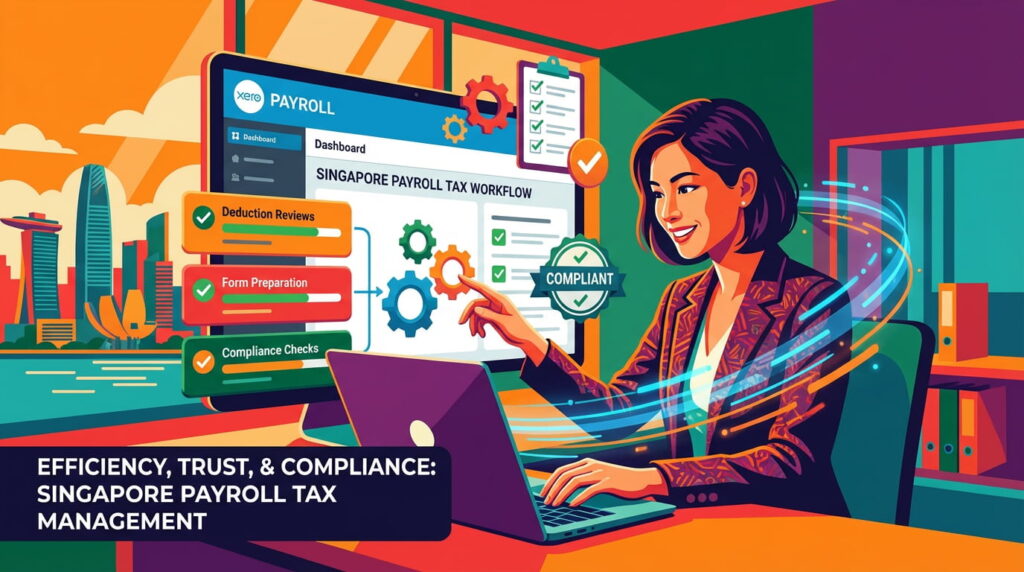
- Run the payroll cycle for the period.
- Review all CPF, IRAS, and other deductions.
- Generate the relevant reports from Xero.
- Submit via Xero’s IRAS-compatible files or online portal.
Practical Tip: Always double-check contribution rates and employee details before submission to avoid penalties.
Benefits of Automating Payroll in Xero
Show the tangible impact on operational efficiency and compliance.
- Accuracy: Reduces human errors in CPF and tax calculations.
- Time-Saving: Payroll cycles are faster, freeing up managerial time.
- Compliance: IRAS and CPF reports are ready for submission.
- Peace of Mind: Owners focus on strategy rather than administrative firefighting.
Common Pitfalls and How Xero Prevents Them
- Manual errors: Miscalculating CPF or tax deductions.
- Late submissions: Automated reminders ensure deadlines are met.
- Data mismanagement: Centralized employee records reduce inconsistencies.
- Forward Motion: With proper setup, Xero turns a complex task into a streamlined routine.
Read more: Payroll Management & Optimization
- Cash Flow Risks from Poor Payroll Management and How to Fix Them
- Employee Payment Errors: Why They Happen and How Xero Fixes Them
- Xero Payroll vs Other Payroll Software: Which is Best for SMEs?
- In-House Payroll vs Outsourced Payroll: Pros, Cons, and Xero Benefits
- Cost of Payroll Errors vs Investing in Payroll Services
- Why SMEs Choose Xero Payroll Over Manual Accounting
- Monthly Payroll Checklist for Small Businesses Using Xero
- 7 Payroll Reports Every SME Should Track in Xero
- Automated Payroll Tasks You Can Implement in 30 Minutes
Conclusion
For Singapore small business owners, payroll tax compliance can feel like a maze. Xero simplifies the process—automating CPF contributions, generating IRAS-ready reports, and minimizing errors. The result? Operational continuity, reduced stress, and confident compliance.
Streamline your Singapore payroll today with Xero and focus on growing your business instead of managing tax complexity.