
How Cloud Payroll Services Improve Accuracy, Efficiency, and Compliance
Cloud payroll services help SMEs reduce errors, save time, improve compliance, and streamline payroll processes for greater efficiency and accuracy.
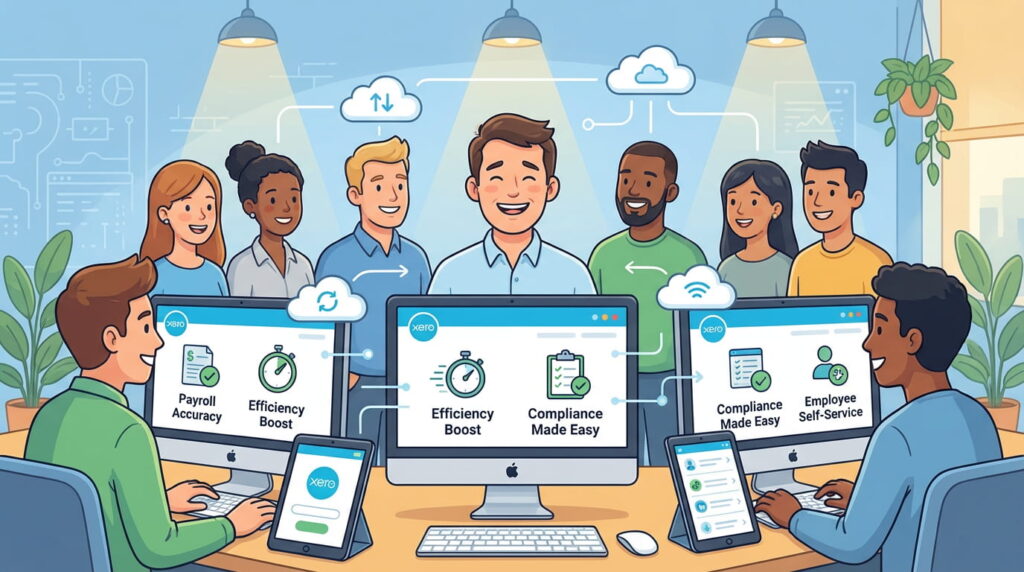
Payroll errors can silently drain small businesses—late submissions, missed super contributions, incorrect tax withholdings—and the stress compounds each month. Cloud payroll services streamline everything, saving time, improving accuracy, and keeping SMEs compliant.
For many small business owners, payroll has always been a constant source of stress. A local café owner once spent an entire weekend manually recalculating overtime because a spreadsheet error went unnoticed. Stories like this are common: small missteps can escalate into costly mistakes, employee dissatisfaction, or even regulatory penalties.
According to the Australian Taxation Office (ATO), payroll errors account for a significant portion of small business compliance fines (ATO). For SMEs, accuracy isn’t just a convenience—it’s essential for survival.
Cloud payroll services are shifting this reality. They turn a traditionally repetitive, error-prone process into a streamlined, automated system that reduces mistakes, saves time, and ensures compliance. Here’s how.
1. Reducing Errors Through Automation
Manual payroll processes are notoriously error-prone. Missed hours, incorrect pay rates, or misclassified employees can create headaches and financial risk. Cloud payroll services automate these calculations, ensuring each pay run reflects the correct entitlements.
A small design agency once found a misclassified contractor had been underpaid for three months. Switching to cloud payroll immediately flagged the discrepancy, allowing corrections before penalties applied.
Benefits:
- Automated calculations for tax, super, and leave
- Fewer errors, protecting compliance
- Transparent audit trail for ATO reporting
Ignoring automation keeps errors persistent, risking employee trust and compliance fines.
Read more: Cloud Payroll & Strategic Insights
- The Role of Payroll Data in Strategic Business Decisions
- Why SMEs Are Moving to Cloud-Based Payroll Services
2. Saving Time and Increasing Efficiency
SMEs often dedicate hours weekly to manual payroll tasks: reconciling spreadsheets, updating rates, and distributing payslips. Cloud payroll consolidates these tasks into a single workflow.
One local retail chain reported saving six hours weekly after adopting cloud payroll. Payroll processing, approvals, and reporting became almost effortless.
Practical impact:
- Quick processing of pay runs
- Automated distribution of payslips
- Reduced administrative overhead for finance teams
Time saved allows SMEs to focus on core business activities, rather than repetitive payroll work.
Read more: Payroll Management & Optimization
- Cash Flow Risks from Poor Payroll Management and How to Fix Them
- Employee Payment Errors: Why They Happen and How Xero Fixes Them
- Xero Payroll vs Other Payroll Software: Which is Best for SMEs?
- In-House Payroll vs Outsourced Payroll: Pros, Cons, and Xero Benefits
- Cost of Payroll Errors vs Investing in Payroll Services
- Why SMEs Choose Xero Payroll Over Manual Accounting
- Monthly Payroll Checklist for Small Businesses Using Xero
- 7 Payroll Reports Every SME Should Track in Xero
- Automated Payroll Tasks You Can Implement in 30 Minutes
3. Enhancing Compliance and Reducing Regulatory Risk
Cloud payroll services automatically incorporate local tax laws, superannuation requirements, and award rates. This is crucial in regions like Australia, where the ATO monitors payroll compliance closely.
By automating tax deductions and STP reporting, SMEs minimize the risk of penalties. Accurate, real-time reporting ensures business owners remain confident their payroll obligations are met.
A health clinic using cloud payroll avoided late super contribution penalties because automated reminders ensured payments were lodged correctly each quarter.
Read more: Payroll Compliance & Mistakes
- Top 5 Payroll Mistakes Small Businesses Make and How Xero Solves Them
- Payroll Compliance Nightmares and How Xero Prevents Them
- Common Payroll Mistakes SMEs Make and How to Avoid Them
4. Integration with Accounting and HR Systems
One key advantage of cloud payroll is seamless integration. Payroll data feeds directly into accounting, HR, and project management software, eliminating manual data entry and reconciliation errors.
A small marketing firm saw improved financial reporting when payroll and accounting systems synced automatically, giving them instant insights into labour costs and project profitability.
Benefits:
- Real-time financial visibility
- Streamlined reporting for cash flow and budgets
- Reduced double-entry mistakes
Integration transforms payroll from an isolated administrative task into a business intelligence tool.
5. Empowering Employees with Self-Service Tools
Employee self-service portals allow staff to check payslips, leave balances, and tax information without contacting HR or management. This reduces repetitive inquiries and ensures personal data remains accurate.
For example, a boutique consultancy reduced payroll support emails by 70% after enabling employee self-service through their cloud platform. Employees could update bank details and request leave without waiting for HR approvals.
Benefits:
- Fewer administrative interruptions
- Better data accuracy
- Improved employee satisfaction
Employee empowerment not only saves time but also builds trust and transparency.
6. Scalable Solutions for Growing Businesses
Cloud payroll is adaptable. As SMEs grow, adding new employees, locations, or pay structures is seamless. Traditional payroll methods often struggle to keep pace, increasing the chance of mistakes.
A startup in e-commerce scaled from 5 to 25 employees in under a year. Cloud payroll handled the expansion without additional staff or manual processes, keeping operations smooth and compliant.
Benefits:
- Effortless scalability
- Consistent accuracy regardless of size
- Centralized management of multiple pay groups
Growth doesn’t compromise compliance or accuracy when payroll is automated.
7. Data Security and Confidentiality
Payroll contains sensitive employee data. Cloud platforms offer encrypted storage, secure access controls, and regular backups—features small businesses often cannot replicate with in-house solutions.
A professional services firm avoided potential GDPR compliance issues by using a cloud payroll service with multi-layered security protocols, safeguarding both staff and business data.
Benefits:
- Reduced risk of data breaches
- Centralized, secure records
- Peace of mind for employers and employees
Data security is increasingly a regulatory requirement; cloud payroll helps SMEs meet these standards effortlessly.
Read more: Xero Payroll Setup & Guides
- The Ultimate Guide to Xero Payroll for Small Businesses
- How to Set Up Xero Payroll for Your Small Business
- Running Your First Payroll in Xero: Tips for Accuracy
- Automating Payroll Calculations in Xero: Step-by-Step
- Processing Employee Leave, Overtime, and Bonuses in Xero Payroll
Conclusion
Cloud payroll services transform how SMEs handle payroll. By automating calculations, ensuring compliance, saving time, and empowering employees, they remove the pain and risk of manual processes. Accuracy improves, efficiency rises, and businesses gain the confidence that payroll is managed correctly every pay cycle.
For small businesses, the choice is simple: continue risking errors and inefficiencies, or leverage cloud payroll to streamline processes, reduce compliance risk, and focus on growth.
Consider integrating a cloud payroll solution today to simplify operations, maintain compliance, and give your business the clarity and time it deserves.