The Complete Guide to Cloud-Based Bookkeeping: Benefits, Compliance, and Implementation Strategy
Still buried in receipts, spreadsheets, and late reconciliations? Discover how cloud-based bookkeeping turns financial chaos into clarity, compliance, and control.

Why Cloud-Based Bookkeeping Matters More Than Ever
From global enterprises to solo entrepreneurs, financial operations have become exponentially complex. Traditional bookkeeping methods—paper invoices, static spreadsheets, and disconnected software—can no longer keep pace with the speed and scale of modern business.
In today’s digital economy, financial transparency and compliance aren’t optional—they’re existential. Missed deadlines, inaccurate reconciliations, and outdated systems expose businesses to tax penalties, cash flow disruptions, and regulatory scrutiny.
Cloud-based bookkeeping offers a modern solution: automated accounting, real-time data access, and multi-entity compliance management—all unified in one platform. It’s the bridge between financial chaos and operational control.
The Growing Cost of Inefficiency
 Simplify and scale bookkeeping with cloud solutions
Recent studies by PwC and Deloitte highlight the urgency for modernization:
- 64% of businesses still rely on manual bookkeeping, risking data inaccuracy.
- SMEs lose more than 120 hours annually correcting financial errors.
- Global organizations report up to $800,000 in annual losses due to outdated finance systems.
Whether you’re running a lean startup or managing a multinational operation, these inefficiencies compound over time—reducing agility, transparency, and profit margins. Businesses that stay manual risk being left behind by those automating smarter and faster.
Common Challenges in Financial Transformation
Adopting cloud-based bookkeeping can seem daunting. Yet most challenges are less technical and more strategic in nature. Here are the key barriers most organizations face:
1. Manual Dependency
Legacy processes like spreadsheet-based accounting create bottlenecks, duplicate work, and limit collaboration across teams.
2. Data Fragmentation
Without unified systems, invoices, payroll, and financial data live in separate silos, making reconciliation slow and error-prone.
3. Compliance Complexity
With multi-country tax obligations, IFRS and GDPR compliance, and audit requirements, keeping everything in check manually is nearly impossible.
4. Security Concerns
Many businesses hesitate to migrate due to perceived data risks—though reputable providers now offer encryption, redundancy, and global compliance certifications.
5. Skill and Adoption Gaps
Smaller teams or founders often lack the time and resources to fully deploy or optimize new systems.
Recognizing these friction points is the first step toward eliminating them and building a more agile, transparent financial ecosystem.
Building a Cloud-Ready Finance Function
 Boost efficiency through intelligent financial automation
1. Choose an Integrated Cloud Platform
Select a platform that aligns with your business model and growth stage.
- Startups: QuickBooks Online or Zoho Books for affordability and automation.
- SMEs: Xero for multi-currency and VAT/GST compliance.
- Enterprises: NetSuite or Sage Intacct for global scalability and integrations.
Ensure your chosen solution supports API integrations for CRMs, payroll tools, and tax platforms to create a single source of truth.
Read More:
- Discover how startups streamline finance and stay in control with QuickBooks. Read our full guide: QuickBooks for Startups: How Early-Stage Entrepreneurs Can Automate Finance Without Losing Control.
- Once you’ve chosen your platform, discover how Zoho Books for Small Business transforms everyday accounting into seamless, automated control.
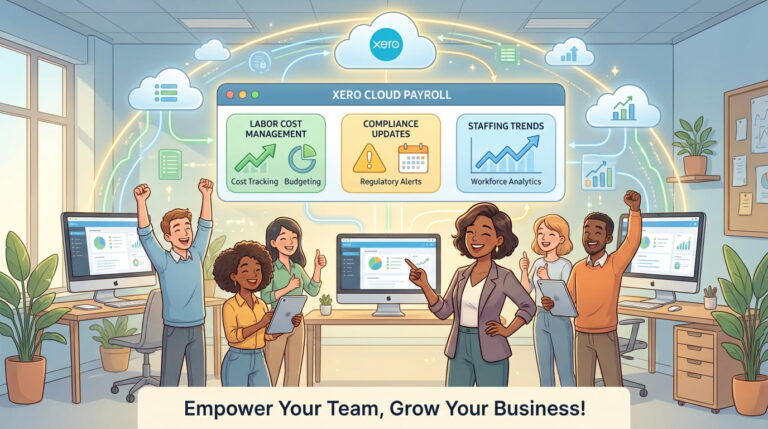
- Discover how Xero streamlines accounting, automates workflows, and implements best practices for growing businesses. Read more: Xero for Small and Medium-Sized Enterprises: Features, Benefits, and Best Practices.
2. Automate Repetitive Tasks
Automation reduces manual input while improving data accuracy.
- Automate recurring invoices and payment reminders.
- Use AI-driven tools to categorize transactions automatically.
- Implement optical character recognition (OCR) for paper receipts.
This frees your finance team—or you, if you’re a solo entrepreneur—to focus on strategic analysis rather than data entry.
3. Prioritize Compliance and Security
Choose providers that comply with IFRS, GAAP, SOC 2, ISO 27001, and GDPR.
- Set automated tax reminders and compliance alerts.
- Restrict user access with role-based permissions.
- Back up all data securely across multiple servers.
For small businesses, this builds investor trust. For global corporations, it prevents costly regulatory penalties.
4. Gain Real-Time Financial Intelligence
Cloud dashboards deliver live insights into cash flow, receivables, and performance KPIs.
- Monitor profit margins, cash flow, and liabilities in real time.
- Use predictive analytics to anticipate future cash requirements.
- Generate instant reports for stakeholders or investors.
A Singapore-based SaaS startup, for instance, integrated Xero with Stripe and HubSpot—cutting manual accounting hours by 85% and improving data accuracy by 92% in just two months.
5. Streamline Change Management
Technology adoption is as much about people as it is about software.
- Communicate the “why” behind the transition.
- Offer practical training for staff or partners.
- Designate internal champions to promote adoption and usage.
Cultural readiness drives successful implementation—transformation begins when everyone understands the value behind automation.
A Step-by-Step Implementation Strategy
Step 1: Conduct a Financial Audit
Assess your current workflows to identify manual redundancies, compliance risks, and reporting inefficiencies.
Step 2: Define Your Objectives
Set measurable targets: faster closings, fewer manual tasks, improved visibility, or regulatory alignment.
Step 3: Select and Customize Your Platform
Match features to your operational needs.
- Start small, scale gradually.
- For multi-region firms, prioritize cross-border compliance modules.
Step 4: Execute a Phased Migration
- Pilot-test one business unit or ledger.
- Validate migrated data before scaling.
- Maintain legacy backups for safety.
Step 5: Train and Empower Teams
Offer workshops and micro-learning modules.
Encourage experimentation and early wins to boost confidence.
Step 6: Track and Optimize ROI
Monitor the impact on accuracy, speed, and cost reduction.
Evaluate performance quarterly to ensure continued alignment with business goals.
Proven Outcomes of Cloud-Based Bookkeeping
Businesses that adopt cloud-based bookkeeping report:
- 60–80% faster reconciliations
- Up to 40% lower finance operating costs
- 90% fewer compliance errors
- Enhanced real-time decision-making capabilities
Example: A mid-sized logistics firm moved to QuickBooks Online with tax integration. Within six months, it reduced audit cycles from 10 days to 2, saving $35,000 annually.
To explore how artificial intelligence amplifies these results and transforms financial operations at scale, read our detailed feature, The Role of AI and Automation in Cloud-Based Bookkeeping.
Key Takeaways
Cloud-based bookkeeping isn’t just an accounting shift—it’s a strategic evolution. By embracing automation, compliance, and real-time intelligence, businesses of all sizes gain the financial clarity and control required to compete globally.
- Solo Entrepreneurs: Gain time and reduce manual work.
- Startups: Build investor-ready transparency and scalability.
- SMEs: Improve cash flow and compliance control.
- Enterprises: Strengthen governance and global consistency.
Here are a few of our posts that help you build a steady financial foundation — the kind every business owner expects from a reliable bookkeeping partner. Explore Affordable Bookkeeping Made Simple: A Practical Guide for Small Businesses — a quick primer on keeping your books clean and audit-ready.
If daily operations still feel reactive, check out The Bookkeeping Checklist That Streamlines Every Small Business Workflow — a practical roadmap to stop financial firefighting.
Or if you prefer to go deeper…
Explore 22 Xero Features SMEs Rely On for Seamless Operations — a clear, structured walkthrough of the tools that help finance teams stay aligned, accurate, and scalable.
Conclusion
In a world defined by agility, automation, and accountability, cloud-based bookkeeping is the financial backbone of growth. It transforms fragmented systems into connected intelligence—empowering founders, CFOs, and finance teams to focus on strategy, not spreadsheets.
Adopt cloud-based bookkeeping today to secure the financial clarity and compliance confidence your business needs to thrive in a global marketplace.
Still managing your books manually? Let’s fix that.
GlobalAdminX helps startups and growing businesses shift to efficient, cloud-based bookkeeping—cutting manual work and boosting compliance confidence.