
Common Bookkeeping Errors That Trigger Compliance Risks—and How to Avoid Them
Bookkeeping mistakes creep in silently—missed deductions, misclassified transactions, or late filings; they invite penalties, stress, and lost opportunities. Learn how to avoid them.
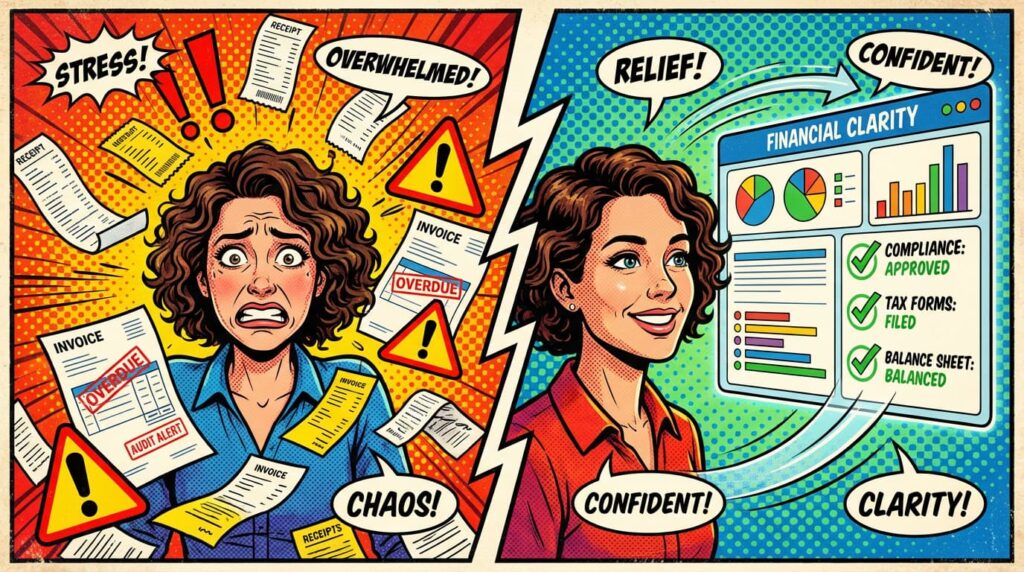
It’s Thursday morning. You open your accounting software and instantly feel a familiar tightness in your chest. Some transactions are uncategorized, invoices are missing, and a tax deadline looms closer than you realized. Panic sets in.
For countless small business owners—from freelance designers to boutique marketing agencies and fast-growing e-commerce stores—bookkeeping errors are more than minor inconveniences. They can spiral into costly compliance risks, delayed funding, and weeks of stress.
Imagine instead a scenario where every transaction is categorized automatically, reconciliation happens weekly, and reports are ready with a single click. You can confidently file taxes, meet regulatory deadlines, and make strategic business decisions.
Common Errors That Trigger Compliance Risks
This article breaks down the most common bookkeeping mistakes and shows how to avoid them, turning chaos into control.
Misclassified Transactions
Misclassifying income or expenses can distort profitability, tax reporting, and compliance.
Features:
- Automated categorization tools
- Predefined tax categories
Benefits:
- Accurate financial statements
- Correct tax reporting
- Reduced risk of fines or audits
Strategic Use-Case:
A small marketing firm misclassified software subscriptions as capital expenses. Correcting categories prevented a $2,000 tax misreporting issue.
Learn How to Avoid Misclassifying Transactions
Late or Missed Reconciliations
Failing to reconcile bank accounts can hide errors, duplicate payments, or fraudulent activity.
Features:
- Weekly reconciliation templates
- Automated bank statement imports
Benefits:
- Real-time visibility of cash flow
- Early detection of discrepancies
- Stronger compliance posture
Strategic Use-Case:
A freelance designer who reconciled weekly spotted a double client payment and corrected it before tax filing, avoiding penalties.
Inaccurate or Incomplete Receipts
Receipts missing key information or lost entirely lead to denied deductions and audit risks.
Features:
- Digital receipt capture apps
- Cloud storage for invoices and receipts
Benefits:
- Backup for tax audits
- Maximized deductible expenses
- Simplified record-keeping
Strategic Use-Case:
An online boutique owner using mobile receipt capture recovered overlooked shipping fees for deductions, reducing tax liability.
Learn How to Manage Receipts Efficiently
Ignoring Sales Tax Requirements
Many businesses neglect local, state, or online sales tax obligations, triggering fines or audits.
Features:
- Sales tax tracking integrated with invoicing
- Automated tax rate calculation
Benefits:
- Accurate tax collection
- Reduced compliance penalties
- Better regulatory reporting
Strategic Use-Case:
A subscription box service correctly integrated sales tax automation, avoiding $1,500 in penalties for previous reporting errors.
Explore Sales Tax Automation Tools
Mixing Personal and Business Accounts
Combining personal and business funds complicates reporting, obscures deductions, and increases audit risk.
Features:
- Separate bank accounts for business
- Integrated bookkeeping software
Benefits:
- Clear financial picture
- Easier audit trails
- Improved credibility with lenders
Strategic Use-Case:
A personal trainer separated personal and business expenses, improving clarity for quarterly tax filing and a small business loan application.
Delayed Expense Tracking
Failing to log expenses timely can distort profit margins and misrepresent financial health.
Features:
- Mobile expense tracking apps
- Automated recurring expense capture
Benefits:
- Real-time insights
- Accurate monthly reporting
- Reduced compliance risk
Strategic Use-Case:
A consulting firm tracked travel expenses daily, ensuring tax deductions were correct and timely.
Not Leveraging Professional Guidance
DIY bookkeeping without guidance can lead to overlooked rules, misfilings, and compliance gaps.
Features:
- Professional bookkeeping consultations
- Expert-reviewed reports
Benefits:
- Reduced errors
- Confidence during audits
- Predictable, compliant financial operations
Strategic Use-Case:
A boutique e-commerce store engaged a bookkeeping service, catching early errors that prevented potential sales tax audits.
Here are a few of our posts that help you build a steady financial foundation — the kind every business owner expects from a reliable bookkeeping partner:
Accounting Tools & Software
- From Startups to Enterprises: How to Pick the Ideal Cloud-Based Accounting Solution — A quick guide to choosing the right cloud accounting tool for your business.
- Budget-Friendly Accounting Tools Small Businesses Can Leverage — A curated breakdown of cost-efficient financial tools that optimize workflows without inflating overhead.
- Xero for Small and Medium-Sized Enterprises: Features, Benefits, and Best Practices — A practical guide to using Xero effectively and getting more clarity in your finances.
Bookkeeping Basics & Best Practices
- Explore Affordable Bookkeeping Made Simple: A Practical Guide for Small Businesses — A quick primer on keeping your books clean and audit-ready.
- The Bookkeeping Checklist That Streamlines Every Small Business Workflow — A practical roadmap to stop financial firefighting.
- In-House vs. Outsourced Bookkeeping: Which Is More Cost-Effective for Small Businesses? — A practical guide showing cost-effective bookkeeping options for small businesses.
Automation & Efficiency
- How Automation Lowers Bookkeeping Costs for Growing Companies — Practical strategies and tools to reduce bookkeeping expenses while maintaining accuracy and efficiency.
- Why Clean Books Make Loan Applications, Investor Talks, and Tax Season Easier — Proven strategies and tools to keep your financial records organized, streamline decision-making, and ensure stress-free loan, investor, and tax processes.
Xero Productivity & Add-Ons
- Top Xero Add-ons & Integrations to Scale Your Business in 2026 — A practical, up-to-date guide to the Xero integrations that automate workflows, improve cash flow, and help small businesses scale with confidence.
- Explore 22 Xero Features SMEs Rely On for Seamless Operations — A clear, structured walkthrough of the tools that help finance teams stay aligned, accurate, and scalable.
Conclusion
Bookkeeping mistakes are more than minor annoyances—they create compliance risks, fines, and missed opportunities. Implementing structured processes, leveraging automation, and engaging expert guidance transforms financial chaos into clarity. Accurate, audit-ready records simplify tax filings, safeguard against penalties, and provide confidence for strategic business decisions.
Partnering with a trusted bookkeeping service ensures mistakes are caught early, deadlines are met, and growth opportunities are maximized. Start today and transform your books into a source of strength, clarity, and business freedom.